
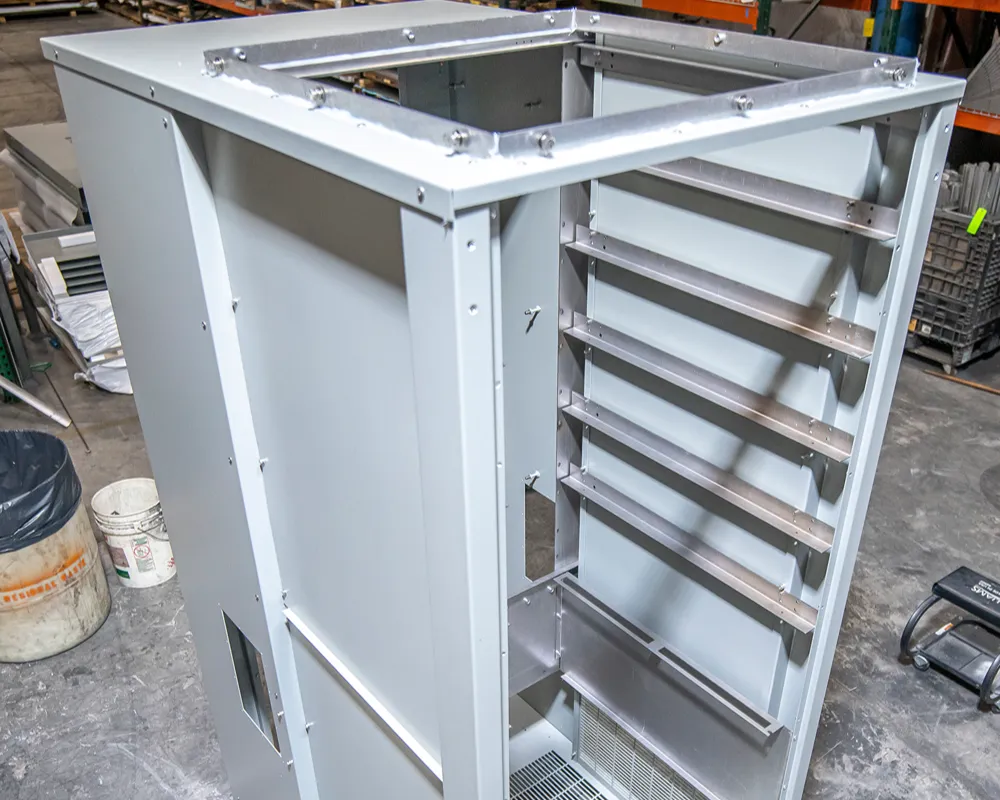
Among the most common materials used for sheet metal enclosures, stainless steel and carbon steel continue to reign supreme. Each offers distinct advantages, but it’s essential to choose the one that best aligns with your performance expectations and project goals. A poor material match can shorten the enclosure’s service life and increase operating costs.
With decades of experience fabricating and assembling custom sheet metal enclosure components, Fralo Industries has practical expertise that we use to help customers select material that delivers the best value for their application.
Read our guide below for an in-depth comparison of both materials so you can get a better idea of which option aligns best with your needs. For more information about our material expertise and advanced capabilities, contact us today.
Standout Characteristics of Carbon Steel
Carbon steel remains a trusted material for sheet metal enclosures because it’s cost-effective but offers outstanding structural integrity. It machines cleanly, welds efficently, and responds well to forming. These characteristics make it a popular choice for a wide variety of different applications.
However, a key limitation of carbon steel is that it is not naturally resistant to corrosion. A powder coating or painted finish is required for carbon steel enclosures so they can deliver lasting performance.
Common carbon steel grades include:
- ASTM A36
- CRS (Cold Rolled Steel)
- HRPO (Hot Rolled Pickled and Oiled Steel)
Qualities & Advantages of Stainless Steel
Unlike carbon steel, stainless steel balances durability with natural corrosion resistance. Its chromium content creates a protective surface layer that helps defend against moisture, chemicals, and other environmental threats without the need for specialty finishes.
Stainless steel also delivers a sleek, modern appearance that holds up even after years of use. Plus, it’s hygienic and easy to clean, which makes it a practical choice for applications with strict sanitation requirements.
Side-by-Side Comparison: Considerations for Sheet Metal Enclosures
| Comparison Factor | Carbon Steel | Stainless Steel |
|---|---|---|
| Material Cost | Lower | Higher |
| Corrosion Resistance | Requires Coating | Excellent |
| Strength | Excellent | Excellent |
| Surface Finish | Painted or Powder Coated | Brushed, Polished, or Mill Finish |
| Maintenance Requirements | Higher | Lower |
Weighing Cost vs Lifetime Value
Many manufacturers only look at the price when deciding between carbon or stainless steel for their sheet metal enclosure, but cost doesn’t always translate to long-term value. A lower upfront cost may seem attractive at first, yet operating conditions often determine the true value of a sheet metal enclosure over its lifespan.
Intended use, operating conditions, and daily wear can all significantly influence an enclosure’s durability. Maintenance expectations, desired appearance, and expected service life should also be considered during the material selection process. Bringing every one of these factors into the equation helps manufacturers and engineers choose a material that delivers the greatest return on investment.
For Expertise on Sheet Metal Enclosures, Call Fralo Industries
Choosing between stainless steel and carbon steel depends on the demands of the application, not just the price of the material. Carbon steel provides outstanding strength, excellent manufacturability, and strong value for many projects, but it requires surface treatment to deliver ultimate protection. Naturally corrosion resistant, stainless steel excels in harsh environments, but it can come with a higher upfront cost. Understanding these differences helps you make the right choice.
Fralo Industries manufactures high-quality sheet metal enclosures backed by comprehensive in-house capabilities that simplify the production process. Our experienced team works closely with each customer to recommend the material and manufacturing methods for their application. Contact us today to learn more about our material expertise and fabrication solutions.