
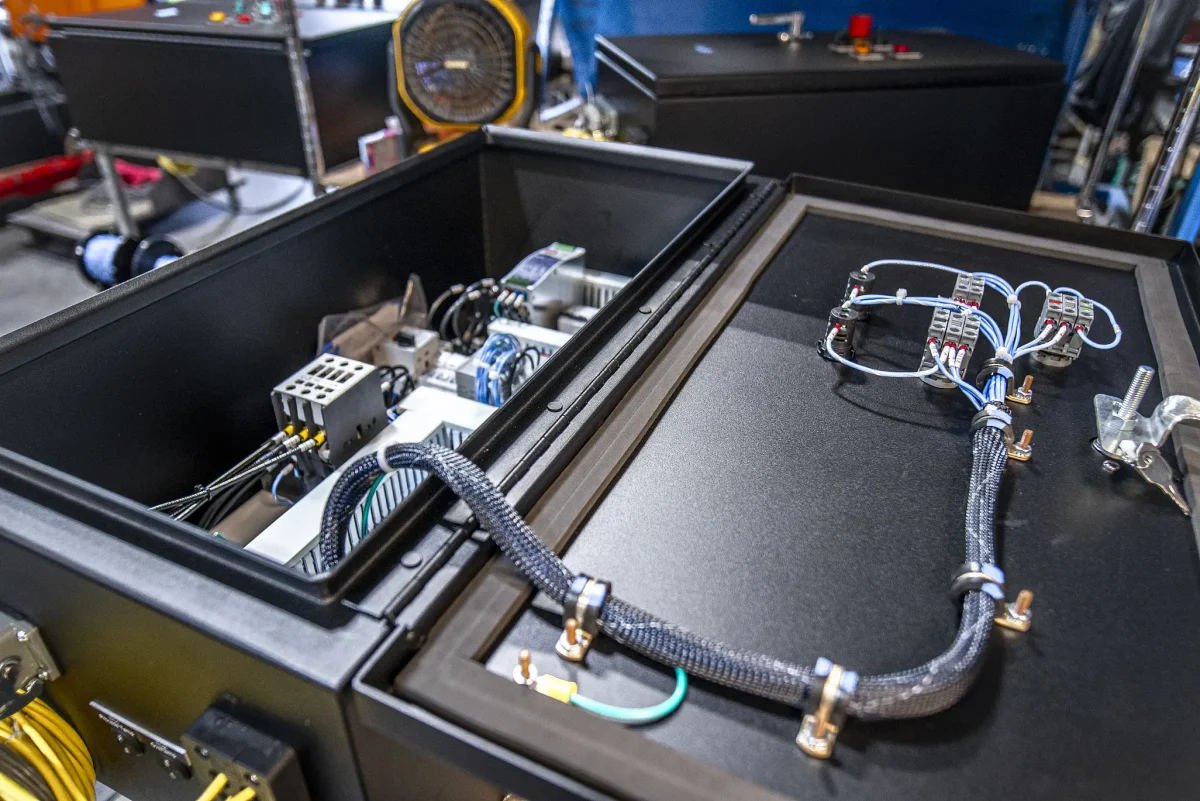
Key Takeaway: Custom electrical enclosures built for harsh environments must account for material selection, sealing, finishing, and fabrication quality. Working with an experienced manufacturer helps ensure long-term reliability, compliance, and protection against corrosion, moisture, and environmental exposure.
Harsh environments introduce challenges that standard electrical enclosures are not built to withstand. Moisture, corrosive chemicals, temperature fluctuations, and airborne contaminants can all compromise enclosure performance over time. In many cases, failures don’t happen immediately; they develop gradually, leading to downtime, safety concerns, and costly replacements.
For procurement teams and engineers, selecting custom electrical enclosures is a performance and risk decision that directly affects system reliability and long-term operating costs.
Below, we’ll outline the key factors that impact enclosure performance in demanding environments, from material selection and fabrication to sealing, finishing, and partner evaluation.
Environmental Conditions That Impact Enclosure Performance
Electrical enclosures used in utilities, telecom, and industrial applications are often exposed to conditions that go far beyond controlled indoor environments.
Moisture and humidity are among the most common challenges, especially in outdoor and washdown environments. Water intrusion can lead to corrosion, electrical faults, and reduced equipment lifespan. In water and wastewater facilities, exposure to chemicals and corrosive atmospheres adds another layer of complexity.
Dust, debris, and airborne particulates can also compromise enclosure integrity. These contaminants may interfere with internal components or degrade sealing surfaces over time. Temperature swings introduce additional stress, particularly when condensation forms inside the enclosure.
Because these conditions vary by application, enclosures must be built to address specific environmental risks rather than relying on generalized assumptions. Industries such as utilities, infrastructure, telecom, and industrial automation require enclosures that perform consistently under real-world exposure.
Material Selection and Fabrication Considerations
Material selection plays a central role in how an enclosure performs over time. Aluminum, carbon steel, and stainless steel each offer distinct advantages depending on the application.
- Aluminum is often selected for its lightweight properties and natural resistance to corrosion, making it suitable for certain outdoor applications.
- Carbon steel provides strength and cost efficiency, but typically requires protective finishing to withstand environmental exposure.
- Stainless steel offers higher resistance to corrosion and is commonly used in washdown or chemical environments.
Material choice alone is not enough, however. Fabrication quality directly affects how well that material performs. Precision forming ensures consistent geometry and proper alignment, while weld integrity contributes to structural strength and environmental protection. Feature placement, including cutouts and mounting points, must support both accessibility and sealing performance.
Material and fabrication must work together as a unified approach. When they are aligned, the enclosure can withstand demanding conditions without compromising performance.
Sealing, Protection, and NEMA Requirements
NEMA ratings are often used as a benchmark for enclosure protection, but they represent only part of the overall picture. Ratings such as NEMA 3R, 4, and 4X define the level of protection against environmental factors like water, dust, and corrosion.
However, achieving these ratings in real-world conditions depends on how the enclosure is built. Gasket compression, for instance, must be consistent to maintain a reliable seal. Door alignment also plays a critical role in preventing gaps that allow moisture or contaminants to enter. And sealing surfaces must be properly prepared and maintained throughout the fabrication process.
When these factors are not controlled, even an enclosure specified for a higher NEMA rating may fail to perform as expected. For procurement teams, this reinforces the importance of evaluating not just the rating, but the manufacturer’s ability to execute on that requirement.
Finishing and Corrosion Resistance
Finishing is a critical component of enclosure performance, particularly in environments where corrosion is a concern. One of the best options is powder coating. It provides a durable protective layer that helps shield metal surfaces from moisture, chemicals, and weather exposure.
But the effectiveness of powder coating depends on a number of factors, such as surface preparation, coating thickness, and process control throughout the finishing stage. That’s why it’s essential to integrate finishing into the overall manufacturing process. When done properly, it can significantly increase the long-term durability of enclosures that are exposed to even the harshest environments.
Assembly and Integration Considerations
Assembly is where fabrication, material selection, and finishing come together. It is also where potential issues often become visible.
Hardware integration, including hinges, latches, and mounting components, must be aligned with the overall enclosure structure. Improper integration can affect sealing performance, accessibility, and long-term reliability. Internal component fit is equally important, as it influences both functionality and serviceability.
Accessibility should also be considered. Enclosures that are difficult to service can increase maintenance time and introduce additional operational challenges. Proper assembly ensures that internal components are securely mounted while remaining accessible for inspection and repair.
What to Look for in a Custom Electrical Enclosure Partner
Selecting the right manufacturing partner is one of the most important decisions when sourcing custom electrical enclosures for harsh environments. Not all “custom” solutions deliver the same level of performance or reliability.
A qualified enclosure partner should be able to demonstrate:
- Experience with harsh environment applications such as utilities, infrastructure, and industrial systems, where moisture, corrosion, and exposure are constant factors
- In-house fabrication, finishing, and assembly to maintain quality control, reduce variability, and improve lead time predictability
- A working understanding of NEMA requirements and the ability to show how their build processes support real-world environmental protection
- Material and fabrication alignment that supports corrosion resistance, structural integrity, and long-term durability
- Documented quality systems (ISO 9001:2015) to ensure repeatability, traceability, and consistent performance across production runs
Manufacturers that meet these criteria are better equipped to deliver enclosures that hold up in demanding environments — not just at installation, but throughout their service life.
Partner with Fralo for Custom Electrical Enclosures Built for Harsh Environments
Fralo supports customers with custom electrical enclosures built to perform in demanding conditions. With expertise in sheet metal fabrication, in-house powder coating, and integrated assembly, Fralo delivers solutions aligned with real-world application requirements.
ISO 9001:2015-certified processes provide consistency and traceability, while Fralo’s U.S.-based manufacturing ensures responsiveness and control throughout the project lifecycle.
From material selection and fabrication to finishing and assembly, every step is managed to support long-term durability, compliance, and performance.
When your application requires reliable protection in harsh environments, working with the right manufacturing partner makes a measurable difference. Connect with Fralo to discuss your custom electrical enclosure requirements and ensure your next project is built for long-term performance.